

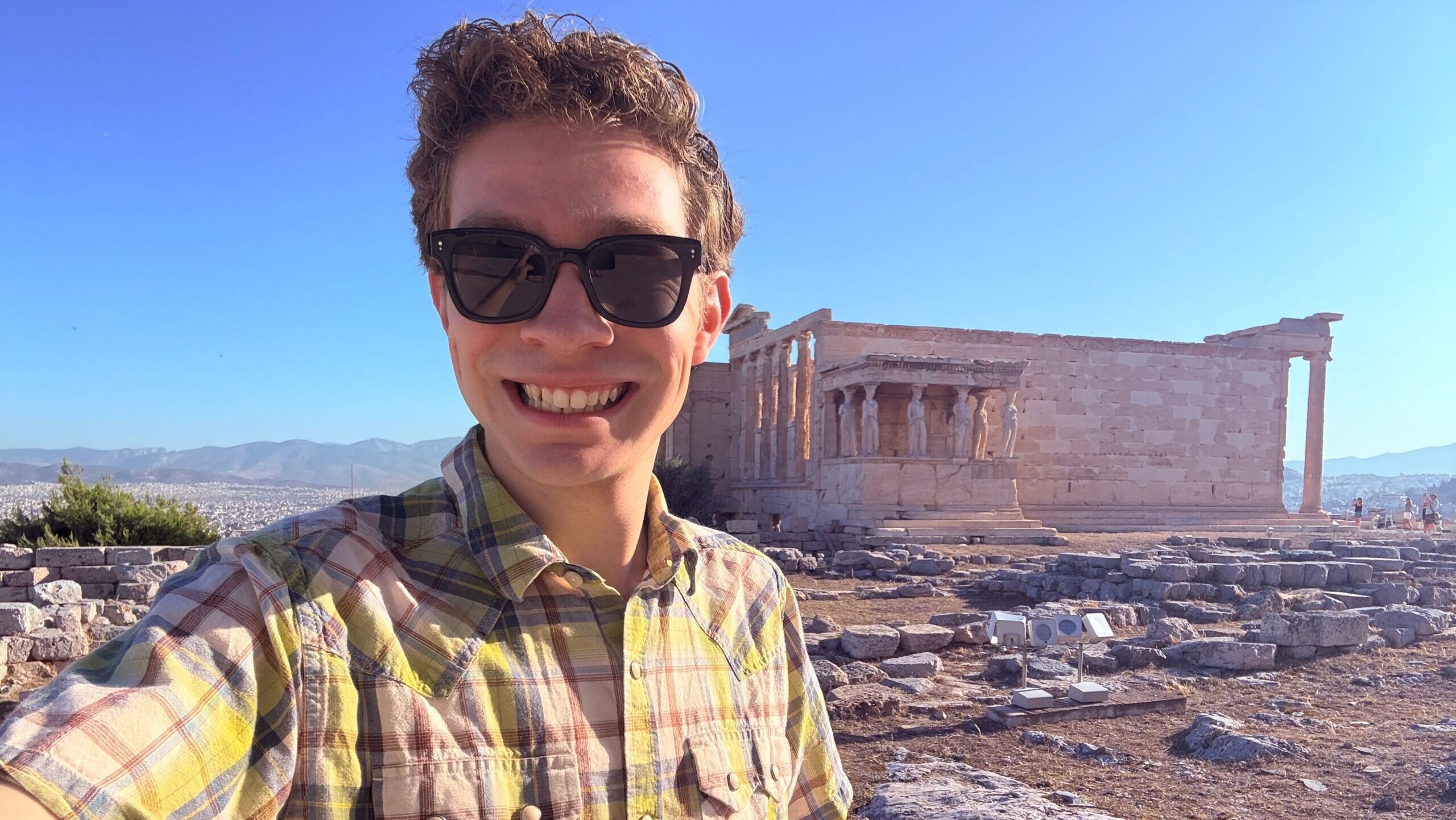
This new Q&A series highlights the range of work from students pursuing the minor in medieval studies, an interdisciplinary study of the Middle Ages in a global perspective. Our first spotlight is on Jack Geld ’26, a classics major pursuing minors in medieval studies and translation and intercultural communication.
Why did you decide to minor in Medieval Studies?
I developed an interest in the reception and evolution of classical culture in medieval Europe. I also connected well with the faculty of Medieval Studies, and I consistently enjoy the lectures, social gatherings, and special events organized by the program.
What has been your favorite MED course so far and why? Cross-listed courses count!
My favorite MED course was “From Parchment to Print: Greek Palaeography and Textual Criticism.” [It’s a Classics course, cross-listed with Medieval Studies and Hellenic Studies.] I learned how to read medieval Greek manuscripts, which became a new passion for me and has since shaped my independent research at Princeton.
Tell us about your independent work (topic or title).
My senior thesis is investigating the educational use of Iliad manuscripts at St. Catherine’s Monastery, ranging from the 9th century to the 18th century, with comparisons to similar manuscripts held in other libraries (including two in Special Collections at Princeton).
What’s one interesting or surprising thing that you’ve found during your independent research?
I was surprised to learn that the Iliad was valued as an educational text for monks in 18th-century Ottoman Egypt. Why was an archaic pagan Greek epic still worth reading two and a half millennia later in a Christian monastic setting? This question has taken me on a mission to better understand the legacy of the Greek classics in the educational tradition of the post-classical world.
Is there anything else you’d like to mention about your experience in the MED minor?
I am always impressed and delighted by conversations with my peers in Medieval Studies. The variety of interests and research topics among the students, covering a vast range of time periods and geography, makes for an exciting and enriching community. I am looking forward to learning more about everyone’s independent work during our Senior Thesis Colloquium this spring.
Visit our website to learn more about the Program in Medieval Studies and explore the undergraduate minor. Students can apply as early as sophomore spring. Interested students can reach out to Anna D’Elia, program manager, with questions.