

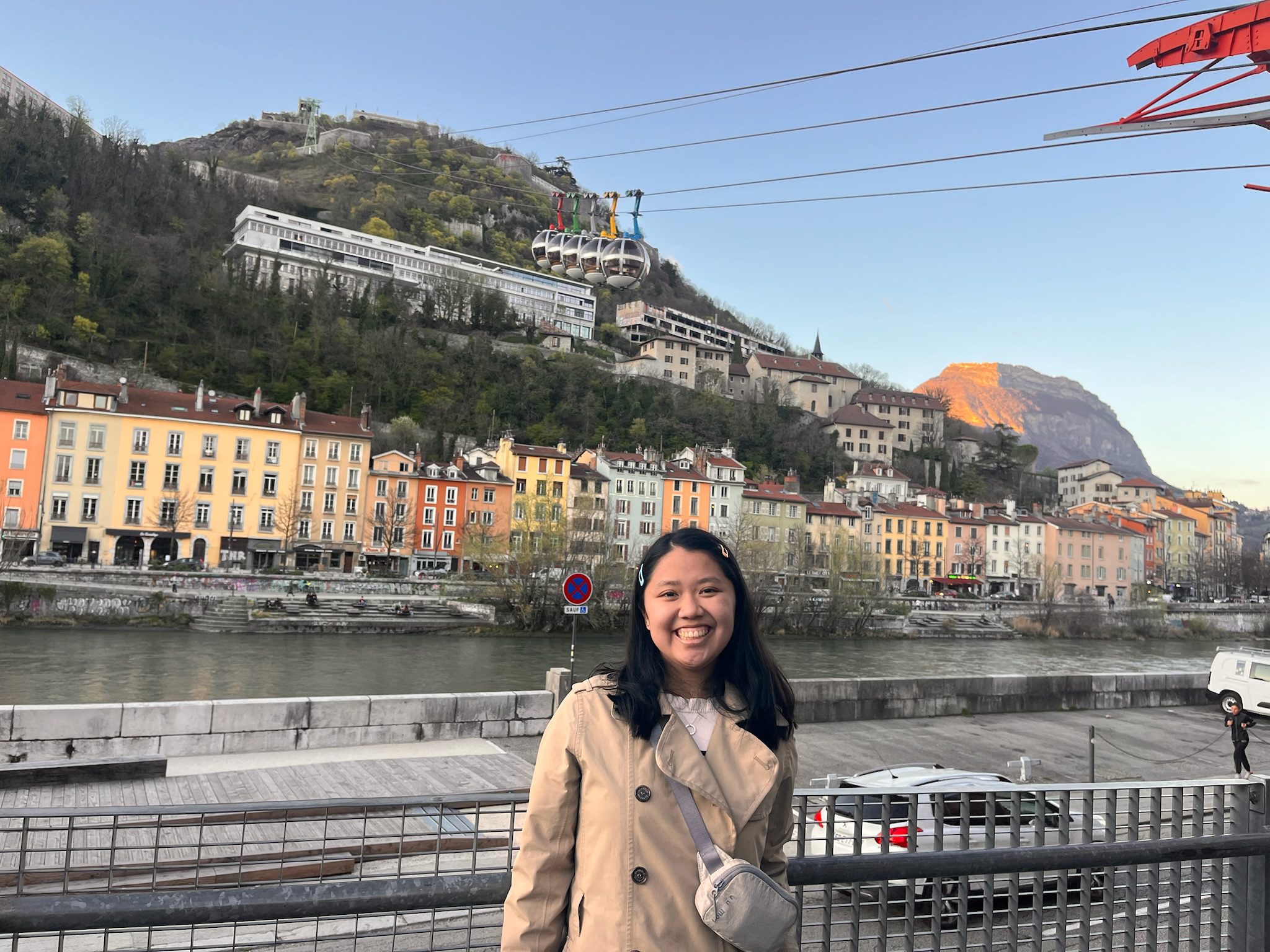
This new Q&A series highlights the range of work from students pursuing the minor in medieval studies, an interdisciplinary study of the Middle Ages in a global perspective. Our latest spotlight is on Kasia Kirnie ’26, a molecular biology major pursuing minors in medieval studies and the history of art.
What got you interested in medieval studies?
Instead of a Roman Empire phase, I had a Byzantine Empire phase in high school. When perusing areas of study at Princeton, Medieval Studies and Molecular Biology are next to each other in the alphabetic order, which I took as my sign to take the opportunity to learn more about the medieval period.
I had never taken an art history course before college, so I took ART228, “Art and Power in the Middle Ages,” to merge both interests. I loved it and haven’t looked back since!
What has been your favorite MED course so far and why? Cross-listed courses count!
ART311, “Arts of the Medieval Book,” with Professor Kitzinger! I loved being able to explore different manuscript traditions and work as a class to unpack the dense visual information on the page. It was also exciting to talk about the art-making process and the form of the book as an object itself.
Tell us about your independent work (topic or title) for the minor.
My independent work is about cycles of iconoclasm and erasure in Garrett Ms. 27, also known as the Sweetheart Bible. The manuscript is held in Princeton’s Special Collections, so I have been very lucky to be able to work directly with the volumes for the past year.
You just traveled to France for independent research, with support from the Program in Medieval Studies. Tell us a little about the trip and what you learned.
Over spring break, I visited the Bibliothèque Municipale de Grenoble in southeastern France to research iconoclasm in the Genesis initial of a 14th century French Bible. It was amazing to be able to handle the manuscript and examine the pages in natural light.
I ended up being surprised by what I found, as the texture of the pigment used in iconoclastic additions was unique to the damaged sections. It’s very exciting to find another example of later intervention in a manuscript, and I’m excited to include this as comparanda in my independent work!
What’s one interesting or surprising thing that you’ve found during your independent research?
Every page I turn, I feel like I find something new. Some highlights include caricature human figures in a few of the margins, a pair of scraggly unicorns inked in on a flyleaf, and notated music fragments deep in the binding.
Is there anything else you’d like to mention about your experience in the MED minor?
The department is so wonderful and accommodating for requirements! As a STEM student, it has been relatively easy to meet my requirements, and the faculty are so supportive.
Visit our website to learn more about the Program in Medieval Studies and explore the undergraduate minor. Students can apply as early as sophomore spring. Interested students can reach out to Anna D’Elia, program manager, with questions.