

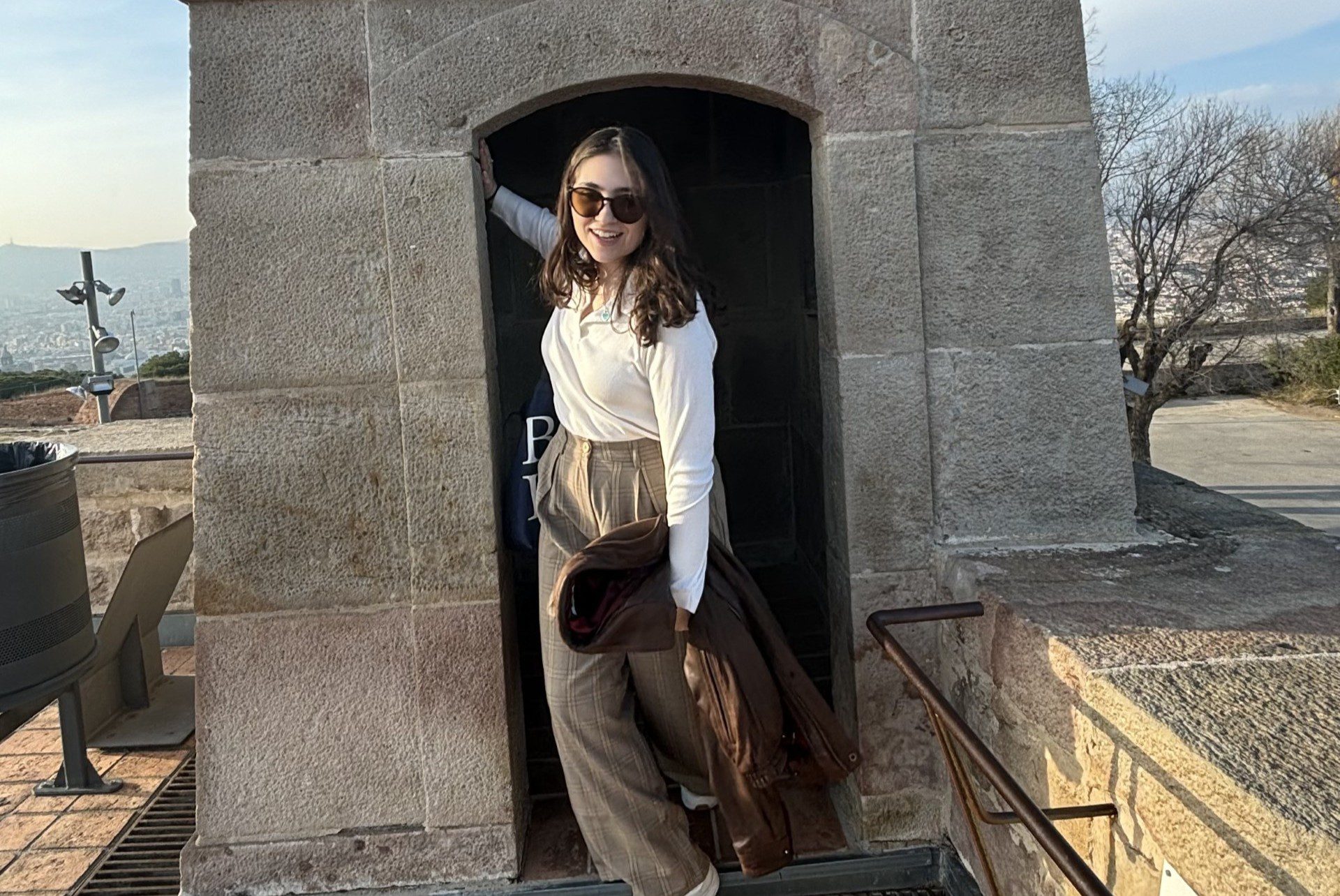
This new Q&A series highlights the range of work from students pursuing the minor in medieval studies, an interdisciplinary study of the Middle Ages in a global perspective. This spotlight is on Lilli Duberstein ’26, a history major pursuing minors in medieval studies, history and the practice of diplomacy, and Russian, East European and Eurasian studies
What got you interested in medieval studies?
I have had an interest in medieval studies since I was young. Growing up in NYC, I loved going to the MET and seeing their medieval collections. Coming to Princeton, I took MED 227, “Worlds of the Middle Ages” my freshman fall with Professors Helmut Reimitz and Jack Tannous and ART 431, “Art, Culture, and Identity in Medieval Spain” with Dr. Pamela Patton that spring. I enjoyed my experiences so much that I continued to take classes and conduct independent research in the program.
What has been your favorite MED course so far and why? Cross-listed courses count!
This is a very hard choice but I would have to say HIS 345, “The Crusades” with Professor Teresa Shawcross. I took the class in my sophomore year and it has remained a favorite, not only for the small seminar style, but also for Professor Shawcross’s incredibly engaging lectures and kindness to the students. In one memorable instance, I completed and submitted my midterm paper in the middle of the Palace of the Grand Master of the Knights of Rhodes, where I was attending a Model UN conference. Upon returning, I was given the opportunity to present my photos and experiences in Rhodes, where you can still see traces of the Knights of Rhodes in the Old City.
Tell us about your independent work (topic or title) for the minor.
My junior independent work, titled “Beyond the Religious: Illuminated Haggadot as a Window into Everyday Life in 14th century Jewish Catalonia and Aragon,” was advised by Professor Yonatan Glazer-Eytan of the History Department and inspired by previous work in Dr. Patton’s class. These illuminated Haggadot are unique as they include extensive pictorial cycles including figural imagery, which is extremely rare in Jewish manuscripts. I study the depiction of everyday life through these images in three areas: dress and gender, architecture, and feasting. I have continued this project in our Medieval Studies Senior Colloquium.
What’s one interesting or surprising thing that you’ve found during your independent research?
In working on medieval Iberia, I was surprised by how much impact history from hundreds of years ago continues to have on modern political and academic discourse. The debates surrounding convivencia and the Inquisition are complex and deeply tied to personal and national ideas of identity, highlighting for me the importance of the discipline of history for gaining a better understanding of our present as well as our past.
Is there anything else you’d like to mention about your experience in the MED minor?
Although I came into the medieval minor with an interest in the subject, I stayed because of the people. The faculty in the department have been some of the kindest and most supportive I have met at Princeton, and the students are all extremely dedicated and wonderful peers to learn with and from.
Visit our website to learn more about the Program in Medieval Studies and explore the undergraduate minor. Students can apply as early as sophomore spring. Interested students can reach out to Anna D’Elia, program manager, with questions.